Sam Krause · 12 September 2026
Medieval Ruins Spark Fresh Debates on Land Rights Across Stromtal's Outlying Farms
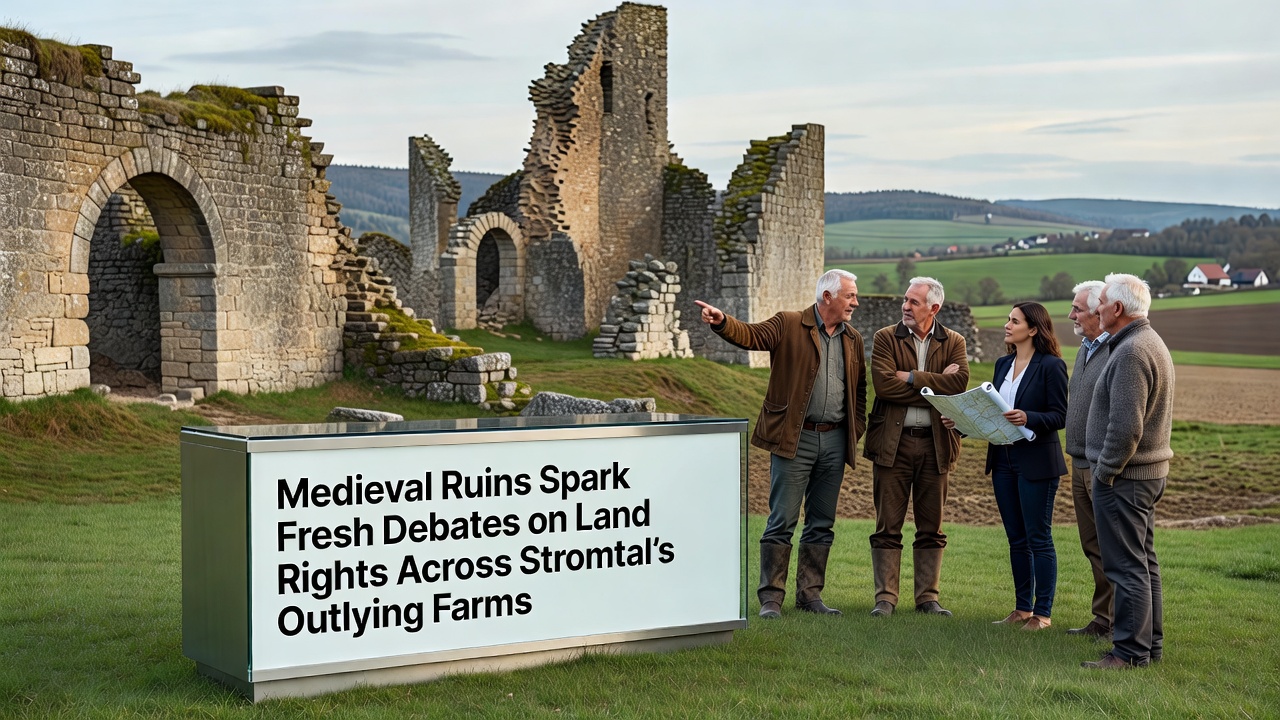
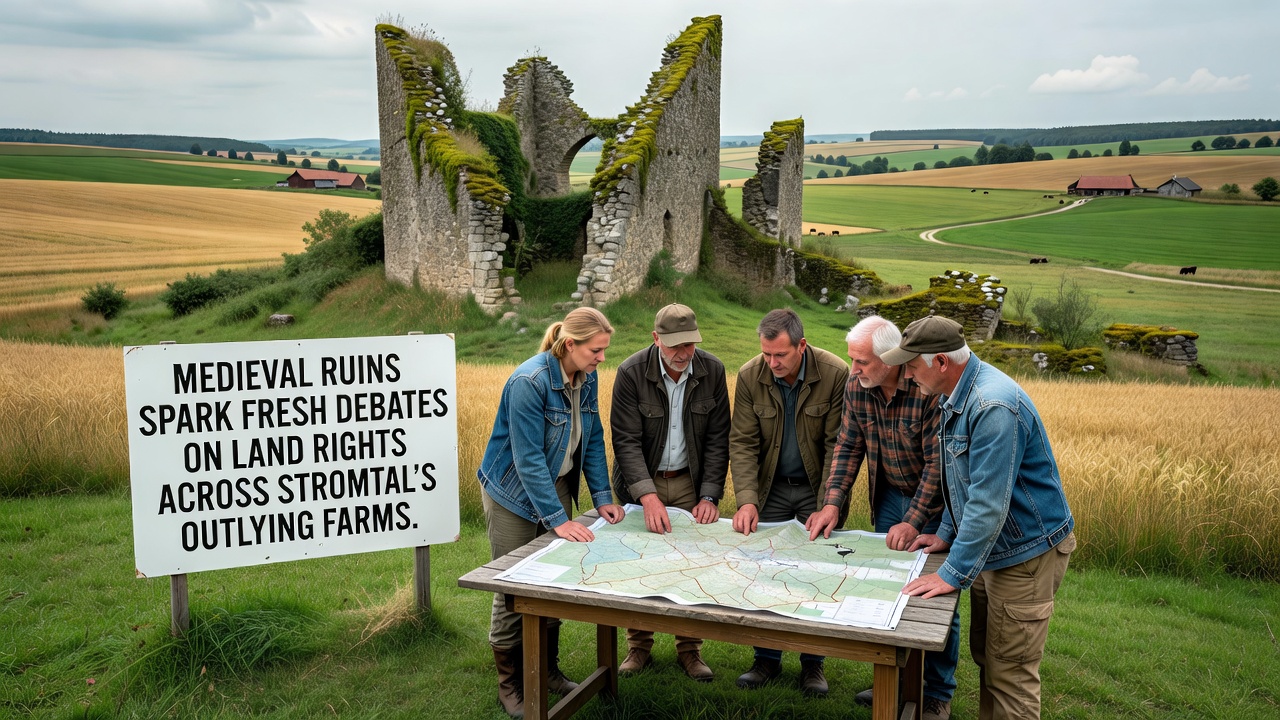
Archaeological teams working in Stromtal's peripheral agricultural zones uncovered extensive medieval stone structures during routine surveys that began in early 2025, and these findings have triggered renewed discussions among local property owners, municipal authorities, and heritage officials over who controls the land and how development proceeds from that point onward. Farmers operating plots along the valley's eastern and southern edges report that the ruins intersect with active grazing areas and irrigation systems, which creates immediate practical questions about continued operations while legal frameworks catch up to the discoveries. Data from regional mapping projects shows that at least twelve separate sites contain remnants dating between the twelfth and fourteenth centuries, including foundation walls, drainage channels, and what appear to be storage cellars, all situated on parcels still registered under private agricultural titles.
Discovery Timeline and Initial Findings
Survey crews using ground-penetrating radar and drone photography identified the first cluster of ruins in March 2025, yet systematic excavation only accelerated after September 2026 when seasonal rains exposed additional wall segments on three adjacent farms. Researchers from the state heritage office documented carved lintels and ceramic fragments consistent with medieval trade routes that once crossed the valley floor, and these artifacts now sit in temporary storage while ownership claims undergo review. Local records indicate that many of these fields passed through generations of the same families since the nineteenth century, yet older charters reference ecclesiastical holdings from the medieval period, which introduces layers of historical precedent into the current ownership disputes. Observers note that similar situations in other European agricultural regions have required multi-year negotiations before any consensus emerges on excavation rights versus continued farming.
Legal Frameworks Under Scrutiny
Current land registry statutes in the Stromtal district classify the affected parcels strictly as agricultural zones, yet national heritage legislation enacted in 2018 grants automatic protection status to any site yielding artifacts older than five hundred years. This overlap means that farmers must now coordinate with both agricultural ministries and cultural preservation boards before undertaking routine maintenance such as plowing or fencing upgrades. One study conducted by the University of Bern's Institute for Landscape Archaeology found that comparable discoveries in neighboring cantons led to average delays of eighteen months in farm modernization projects while title adjustments were finalized. Government agencies have scheduled public consultations throughout the autumn of 2026 to gather input from all parties, and these sessions are expected to examine whether compensation mechanisms or land swaps could resolve conflicts without prolonged court involvement.
Impact on Outlying Agricultural Operations
Property owners managing dairy and grain operations have reported restricted access to portions of their holdings while preliminary assessments continue, and this has forced some to reroute livestock pathways or delay harvest schedules. Figures from the regional farmers' cooperative reveal that three operations have already reduced herd sizes by fifteen percent to accommodate temporary exclusion zones, although officials emphasize that these measures remain provisional until final boundaries are established. What's interesting is how the presence of the ruins has also attracted limited tourism interest, with small groups requesting guided access during off-seasons, which creates an unexpected secondary revenue stream for a few landowners who have secured short-term permits. External guidance from the European Commission's cultural heritage directorate outlines best practices for integrating archaeological sites into working farms without halting production entirely, and several Stromtal representatives attended workshops on these models earlier this year.
Broader Regional Context and Precedents
Similar land-rights tensions have surfaced in other valleys across the Alpine region where medieval infrastructure intersects modern agriculture, and a comparative report issued by the Canadian Museum of History in 2024 highlighted how Canadian provinces handled analogous cases involving Indigenous heritage sites on private farmland. Those precedents involved establishing buffer zones around significant features while allowing continued use of surrounding acreage under strict monitoring protocols. Observers note that Stromtal's situation differs because the medieval remains sit directly beneath active cultivation layers rather than on marginal land, which increases the complexity of any preservation plan. Municipal planners have begun modeling various scenarios that range from full site excavation with public access trails to minimal intervention that leaves structures in place beneath protective soil cover, and each option carries distinct implications for property values and tax assessments.
Conclusion
Resolution of these overlapping claims will likely shape how future discoveries are managed across Stromtal's agricultural periphery, and the outcomes of the 2026 consultation process should provide clearer pathways for balancing heritage protection with operational continuity on working farms. Regional authorities continue to compile documentation from all affected parcels while farmers maintain their seasonal routines under temporary guidelines, and the interplay between historical land use and contemporary legal standards remains the central point of discussion moving forward.