Morgan Griffin · 10 October 2026
Stromtal Valley Programs Integrate Pollinator Education Directly Into Cooperative Farming Practices
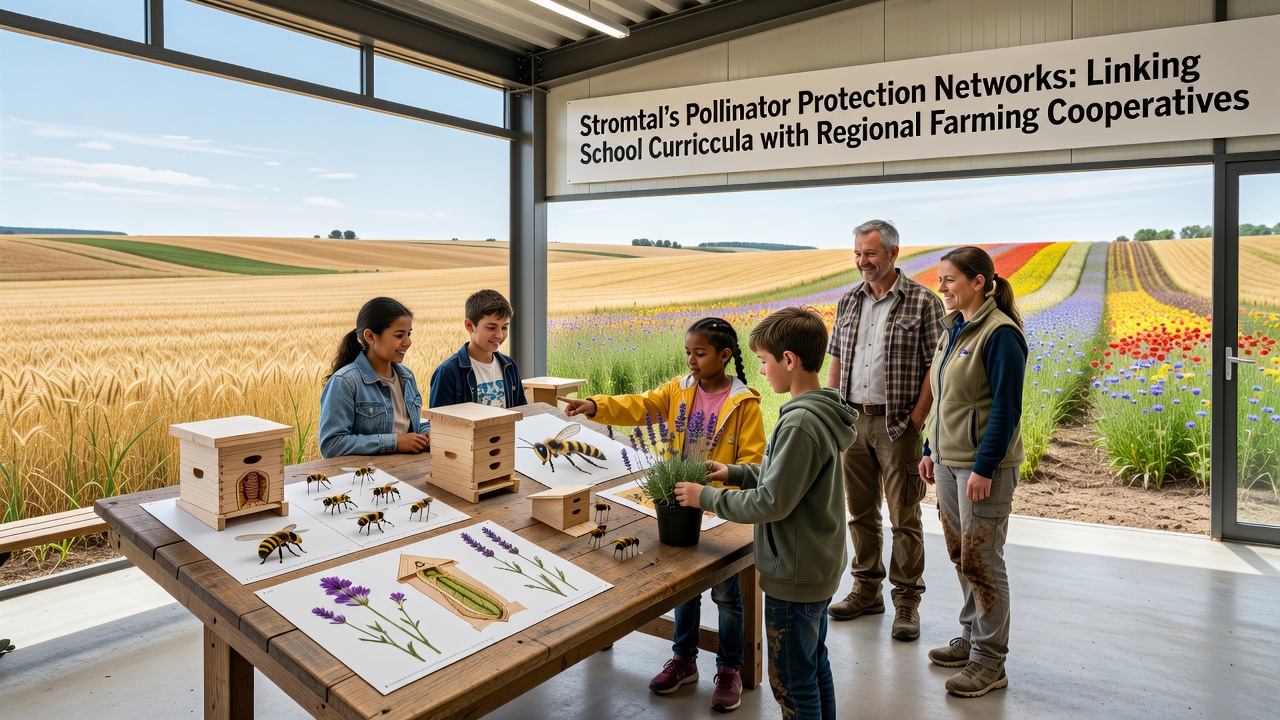
Stromtal's pollinator protection networks have developed structured connections between local school curricula and regional farming cooperatives since the early 2020s, and these partnerships continue to expand through coordinated projects that place students in active roles on cooperative lands. The approach combines classroom instruction on insect ecology with practical fieldwork, where participants plant native flowering species, monitor hive health, and track seasonal migration patterns of key pollinators such as bees and butterflies.
Curriculum Design and Cooperative Involvement
Teachers in Stromtal schools incorporate modules on habitat requirements, pesticide impacts, and biodiversity metrics into science and geography classes, while farming cooperatives supply designated plots for student-led experiments. These plots function as living laboratories where data collection occurs monthly, allowing pupils to record plant growth rates alongside insect visitation counts. Cooperatives in turn receive compiled reports that inform their planting schedules and buffer zone placements along field edges.
One initiative launched additional training sessions in October 2026, when cooperative representatives visited classrooms to demonstrate soil preparation techniques suited to wildflower strips. Students then applied those methods on site, creating continuous corridors that link fragmented meadows across multiple farm holdings. Figures from the Stromtal Agricultural Cooperative Association show that participating farms allocated an average of 1.8 hectares per cooperative for these corridors during the 2025-2026 season.
Field Activities and Data Collection
Participants follow standardized protocols developed jointly by educators and agronomists, which include sweep netting for insect samples and photographic documentation of bloom sequences. Results feed into regional databases maintained by the valley's environmental monitoring center, and schools use the aggregated numbers to calculate local pollination service estimates. The process creates direct feedback loops because farmers adjust crop rotations based on the same datasets students help generate.
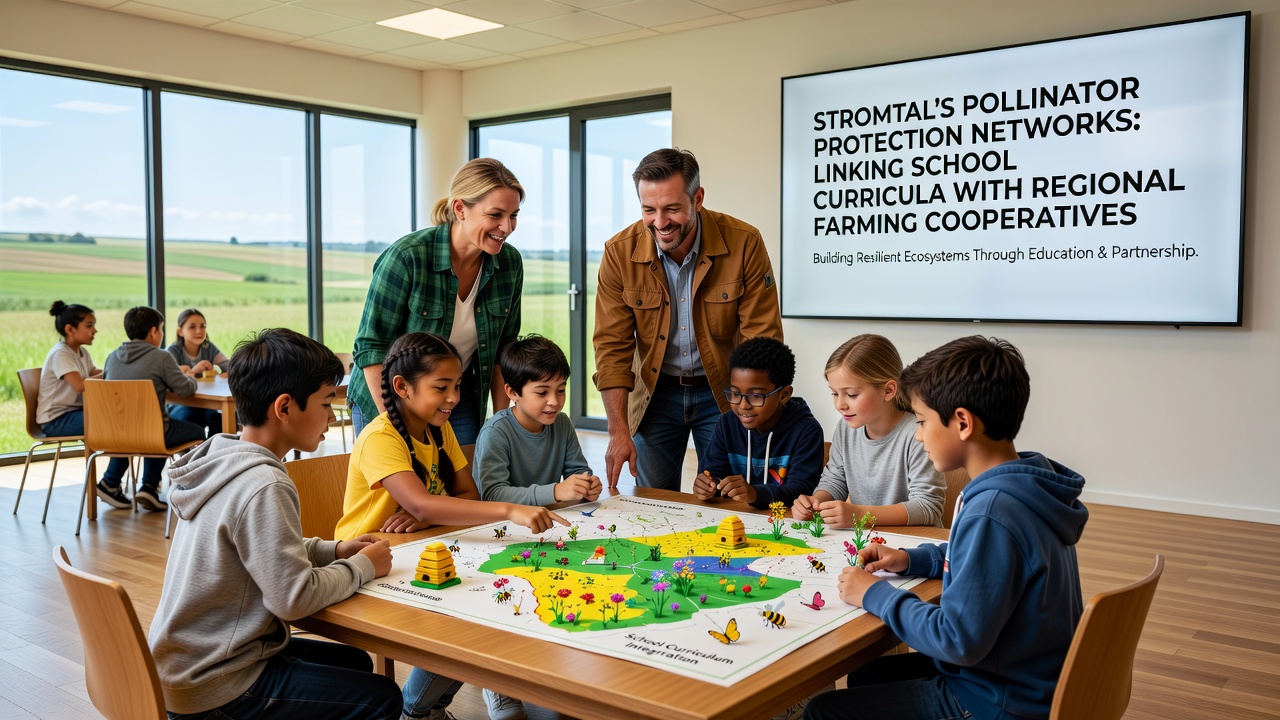
Training extends beyond planting to include safe observation of managed hives placed near school gardens and cooperative orchards. Sessions cover seasonal colony management, disease identification, and the role of diverse forage plants in sustaining populations through winter. External data referenced in these lessons draws from reports issued by the European Environment Agency, which track continent-wide trends in pollinator abundance, as well as research summaries published by Agriculture and Agri-Food Canada on integrated pest management approaches that minimize chemical exposure in crop systems.
Regional Expansion and Measurement
By late 2026 the network had enrolled twelve schools and nine cooperatives across the valley floor and lower slopes. Joint committees meet quarterly to review progress against indicators such as hectares under enhanced habitat management and the number of students completing certified field modules. Records indicate that corridor connectivity increased by 22 percent between 2024 and 2026 according to satellite mapping conducted by the regional planning office.
Equipment sharing arrangements allow schools to borrow soil testing kits and weather stations from cooperative stores, reducing duplication while giving students access to professional-grade instruments. In return, cooperatives receive curriculum-aligned materials they can use during public outreach events at harvest festivals and open farm days.
Conclusion
The integration of pollinator topics into existing agricultural education pathways has produced measurable alignment between academic objectives and on-farm conservation actions throughout Stromtal. Continued coordination between schools and cooperatives sustains the corridors and monitoring efforts that support both local crop yields and regional biodiversity records.