Cameron Beck · 26 September 2026
Stromtal's Beekeepers Form Cross-Valley Network to Protect Pollinator Corridors
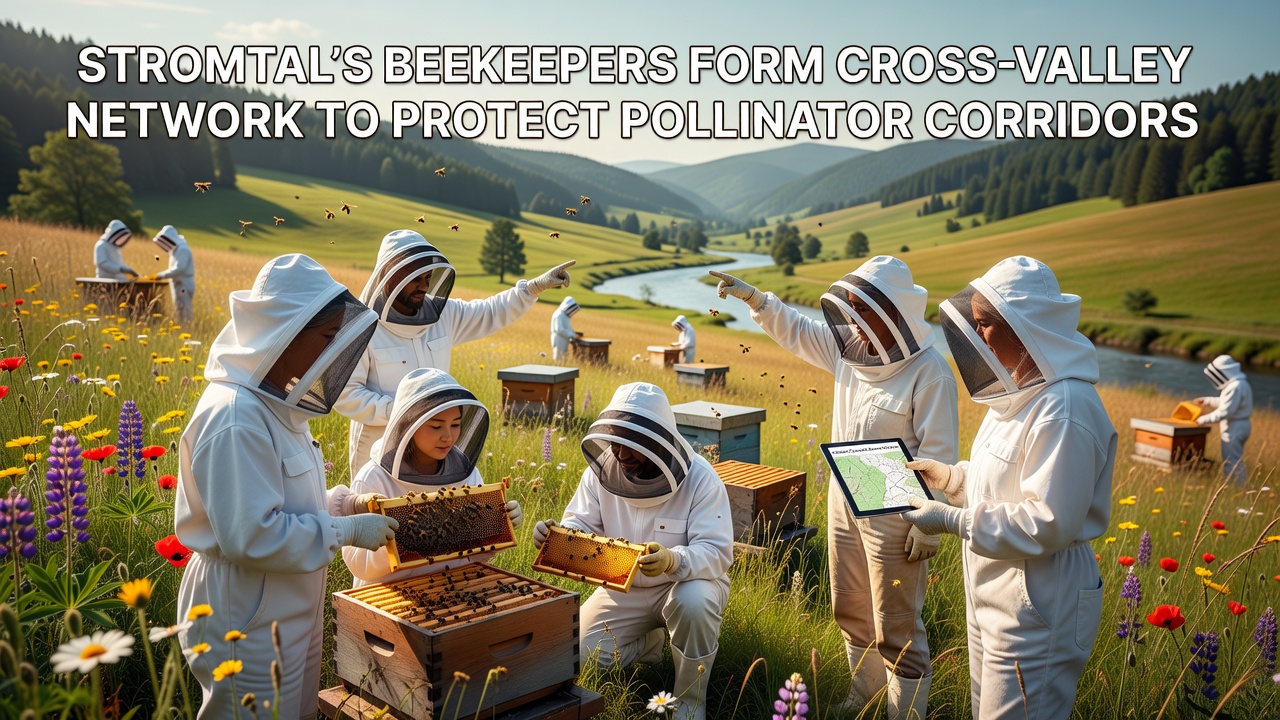
Beekeepers across the Stromtal valley established a coordinated network in September 2026 to safeguard continuous corridors of flowering plants and nesting sites that support honeybees along with wild pollinators, and the initiative connects apiaries on both sides of the river through shared mapping and habitat management practices.
Local groups documented declining forage availability in fragmented areas during prior seasons, which prompted the formation of this cross-valley structure that links individual keepers with farmers and conservation districts. Data from regional monitoring shows that connected habitats sustain higher colony survival rates compared with isolated patches, and the network applies those findings to prioritize planting strips along field margins and riverbanks.
Origins of the Initiative
Stromtal beekeepers had operated independently for generations, yet increasing agricultural intensification reduced the availability of diverse nectar sources between traditional sites. Observers note that participants began informal meetings in early 2025 to exchange records on bloom timing and hive health, and these discussions evolved into a formal alliance by the following summer. The September 2026 launch event brought together representatives from over thirty operations, who agreed on standardized protocols for recording pollinator activity and reporting habitat gaps.
Structure and Operations
The network divides the valley into six zones, each overseen by a lead keeper responsible for coordinating plantings and monitoring. Members share access to a central database that tracks flowering calendars, pesticide application schedules, and observed species counts, which allows quick adjustments when gaps appear in corridor continuity. Equipment such as mobile extraction units and insulated transport boxes circulates among participants, reducing individual costs while maintaining consistent standards for hive movement along established routes.
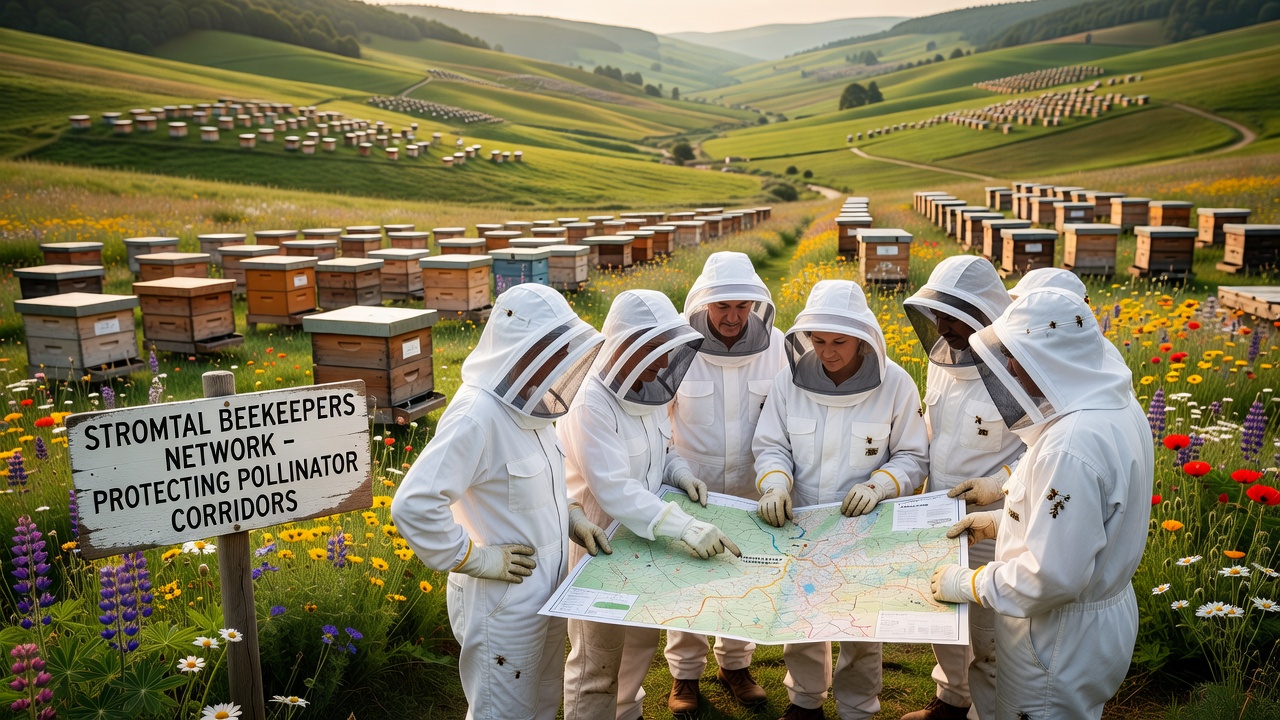
Training sessions held at rotating farm locations cover topics including native seed selection suited to local soil types and techniques for creating overwintering sites for solitary bees. Partners from agricultural extension services contribute technical support on soil preparation, whereas university researchers supply baseline biodiversity surveys that the group uses to measure progress over multiple years.
Ecological and Agricultural Context
Pollinator corridors function as linear habitats that allow bees and other insects to move between feeding and nesting areas without crossing large expanses of monoculture or developed land. According to figures from the European Environment Agency, connected landscapes support greater species richness than disconnected ones, and Stromtal's network applies this principle by focusing on riverine strips already rich in willow and blackthorn. Studies conducted by the University of Hohenheim indicate that even narrow hedgerow networks can increase visitation rates to adjacent crops by up to 30 percent when maintained consistently across seasons.
Local orchards and oilseed fields benefit directly from sustained pollinator populations, and the network records yield data alongside hive metrics to quantify those links. Participants avoid placing hives near treated fields during bloom periods, which aligns with guidelines issued by Germany's Federal Office of Consumer Protection and Food Safety, and the coordinated schedule reduces unintended exposure across multiple operations at once.
Partnerships and Resources
Funding for initial plantings came from a combination of member dues and grants administered through regional rural development programs. The network secured seed mixes containing at least fifteen native species selected for staggered bloom periods, and distribution occurs through a central hub that also tracks germination success. Collaboration with the Australian Centre for Pollinator Research provided comparative data on corridor design in similar temperate climates, which helped refine spacing recommendations for Stromtal's topography.
Regular field walks allow members to inspect progress and adjust plans based on real-time observations, and these gatherings strengthen communication channels that prove useful during unexpected weather events or disease outbreaks. The structure remains open to new participants who agree to follow the shared mapping and reporting standards.
Conclusion
The cross-valley network represents a practical response to habitat fragmentation documented in Stromtal, and its September 2026 establishment marks a shift toward collective management of pollinator resources. Continued data collection will reveal whether corridor improvements translate into measurable gains in colony strength and crop pollination services across participating zones.