Alex Powell · 21 November 2026
Stromtal's Renewable Energy Expansion Prompts New Skill Development for Peripheral Agricultural Workers
Stromtal's shift toward renewable sources has accelerated since regional authorities approved additional wind and solar installations across farmlands, and this development has directly led to targeted training programs designed for workers in outlying agricultural zones, where traditional farming skills now intersect with maintenance and operation of energy infrastructure.
Local cooperatives began coordinating these efforts in early 2025 after project developers reported shortages in qualified personnel for routine tasks such as panel cleaning, turbine monitoring, and basic electrical diagnostics on remote sites, while data from the European Environment Agency shows renewable capacity in similar valley regions grew by 28 percent between 2023 and 2025.
Program Structure and Curriculum Details
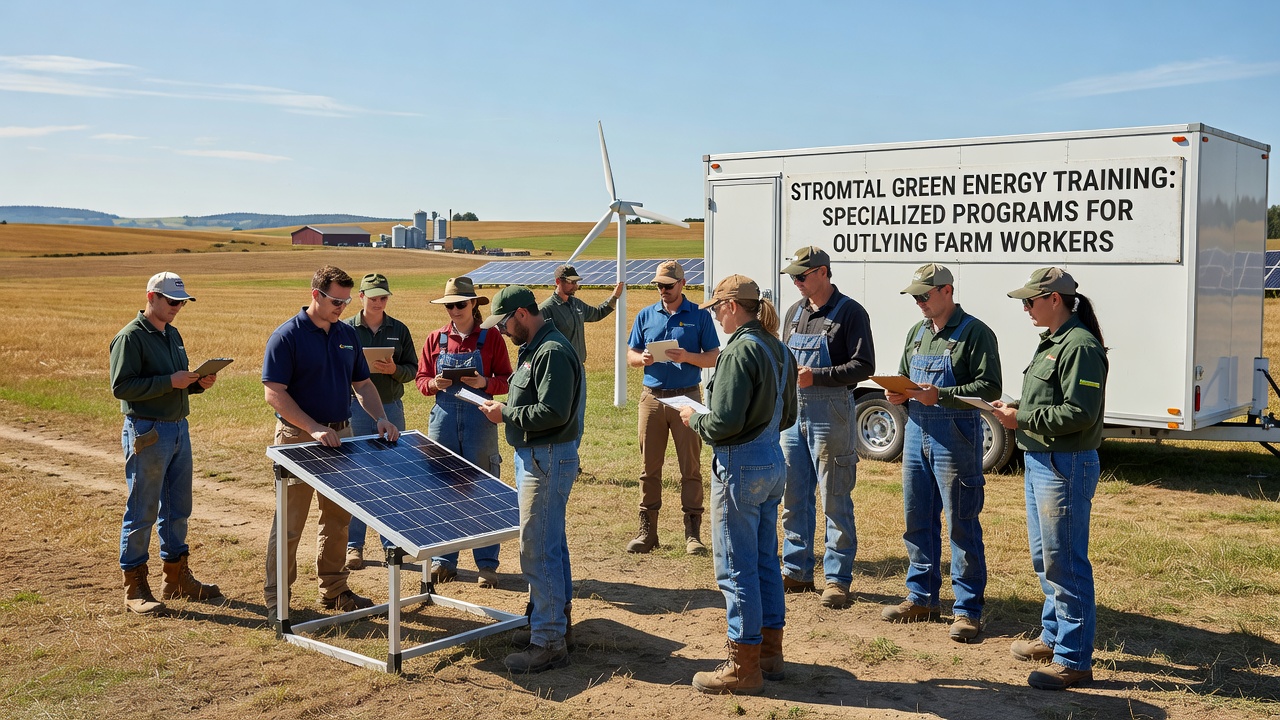
Training modules combine classroom instruction on photovoltaic systems and small-scale wind components with field exercises conducted at active farm installations, and participants learn safety protocols alongside methods for integrating energy generation with ongoing crop and livestock management without disrupting seasonal workflows.
Instructors drawn from technical colleges and energy firms deliver sessions that last between six and twelve weeks, covering topics from grid connection basics to data logging for performance reports, whereas outlying participants receive transportation support and flexible scheduling to accommodate harvest periods.
One cohort completed its first cycle in September 2025, and subsequent groups have included individuals previously employed solely in dairy and grain operations who now handle hybrid roles on their own properties.
Geographic Reach and Enrollment Trends
Outlying farms located more than fifteen kilometers from Stromtal's central valley have seen the highest enrollment rates, because these areas host a larger share of the new turbine arrays and solar fields, and preliminary figures indicate over 340 workers registered for programs running through late 2026.
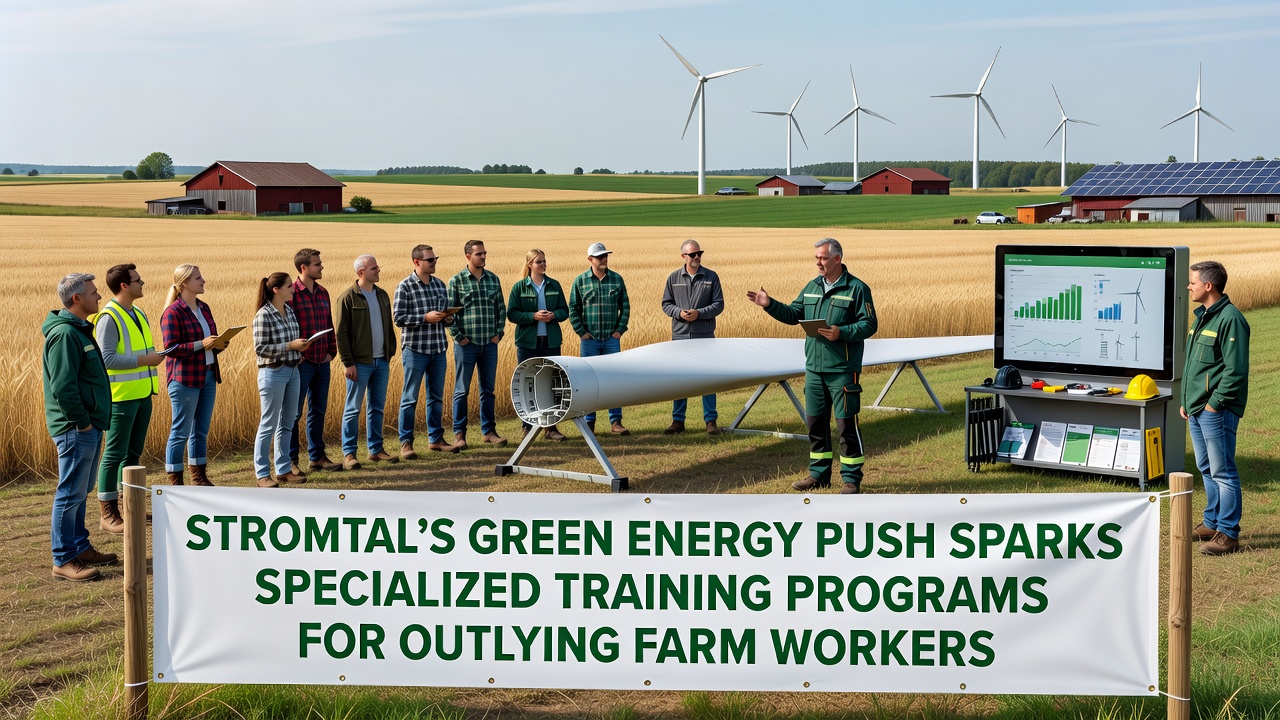
Regional authorities have partnered with agricultural extension services to identify eligible candidates, and enrollment data collected through November 2026 projects further expansion as additional solar arrays come online in the eastern and northern districts.
Partnerships Driving Implementation
Energy companies operating under Stromtal's development permits contribute funding and equipment for the courses, while vocational schools supply certified trainers and standardized assessment tools, and this collaboration model mirrors approaches documented in reports from the International Renewable Energy Agency on workforce transitions in agricultural regions.
Observers note that such partnerships reduce duplication of resources and allow training content to stay aligned with actual installation specifications rather than generic standards, and farm representatives participate in curriculum reviews to ensure practical relevance.
Employment Outcomes and Economic Indicators
Early tracking shows that 72 percent of program graduates secure supplemental contracts with energy operators within three months of completion, according to records maintained by the Stromtal Economic Development Office, and these roles often provide income diversification for households dependent on fluctuating commodity prices.
Researchers at regional universities have begun longitudinal studies to measure changes in household revenue and land-use efficiency, and initial findings suggest that trained workers can perform minor repairs in-house, which lowers downtime for energy assets located far from centralized maintenance crews.
Future Milestones Through November 2026
Authorities plan to introduce advanced certification tracks focused on battery storage integration and predictive maintenance software by mid-2026, and these additions respond to the scheduled commissioning of larger wind projects in the northern outlying zones.
Funding allocations announced for the coming fiscal year include provisions for mobile training units that can reach the most isolated farms, and program administrators expect total participation to surpass 500 individuals once the November 2026 intake opens.
Conclusion
Stromtal's experience illustrates how renewable energy infrastructure and agricultural communities can develop shared skill sets through structured training, and ongoing data collection will clarify the long-term effects on employment patterns and land management across the valley's periphery.